
On being sovereign
Thoughts on Timor Leste's upcoming independence day and whether Wales is worth the effort any more

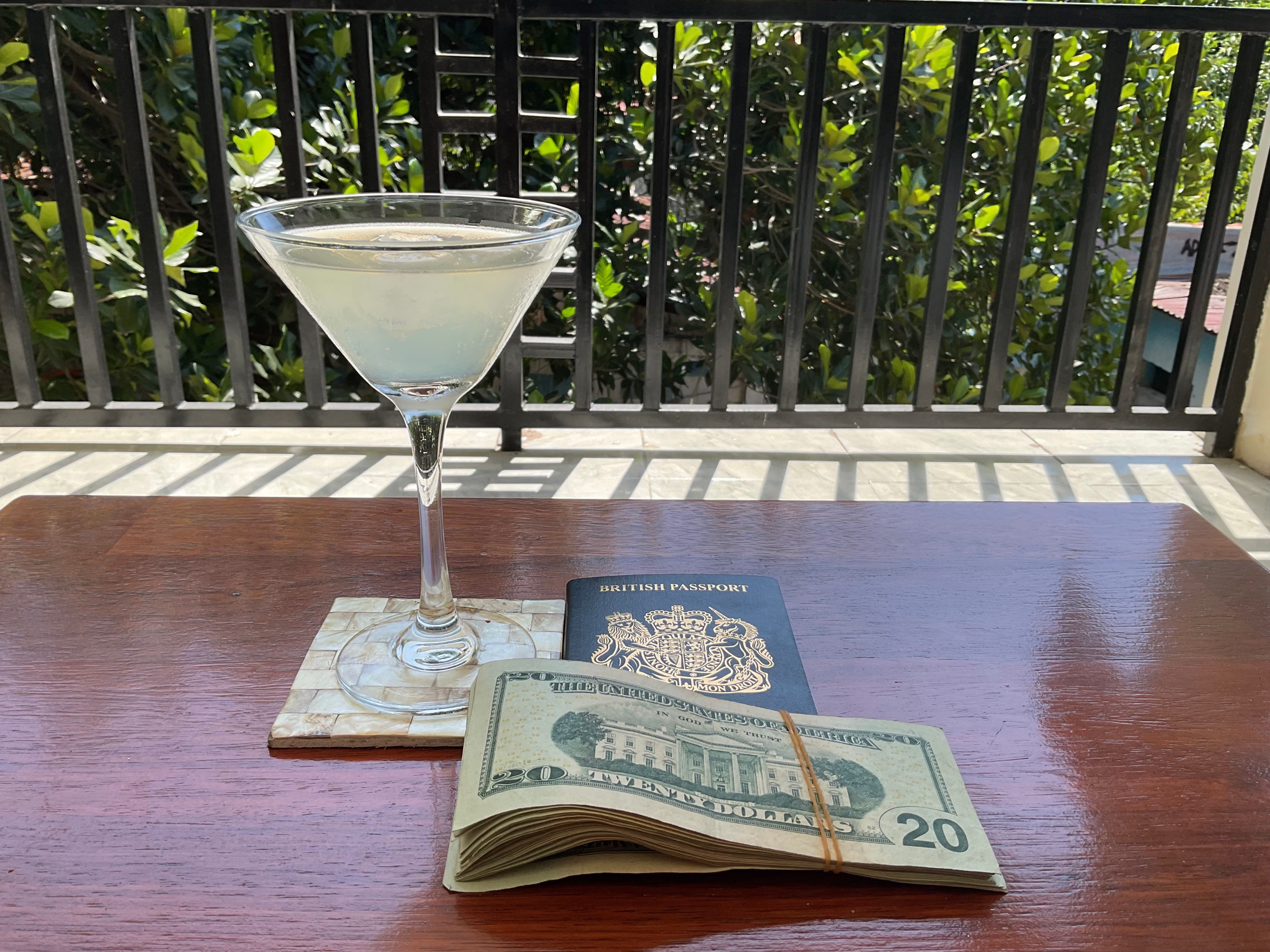
"Doing business in Timor Leste is easier than in the Philippines. The Timorese can't buy guns".
The Timorese aren’t necessarily unfamiliar with firearms. This coming Tuesday, the 20th of March, is a national holiday: the Day of Restoration of Independence.
East Timor spent just over two centuries as a Portuguese colony, something of a backwater amongst Lisbon’s possessions, until the Carnation Revolution of April 1974 overthrew the authoritarian regime established by its long-lasting dictator Antonio de Oliveira Salazar in 1926. After finding themselves suddenly independent, they were equally suddenly invaded and annexed by neighbouring Indonesia.
What followed was a quarter century of killing: Timorese resistance countered by Indonesia reprisals which left tens of thousands dead. When they eventually left, the Indonesians and their local supporters destroyed everything they could. I’ve recently been talking to Timorese of my own age who will forever be traumatised by their memories of having to flee to the hills with their families amongst scenes of murder and destruction.
So there's more than one generation, getting older now, for whom the resort to arms was the ultimate act of resistance. No doubt, out there in the districts, there are still leftover caches of the tools of violence, some still oiled and wrapped ready for use, others rusting slowly in hidden places.
But, in general life today, guns are illegal and, as in Britain, the population are unarmed. That's something quite alien for the businessman from the Philippines I was talking to recently, and whose comment is at the beginning of this article. It was a fascinating conversation, one that really brought it home to me how ...real.. life is in Asia... and it came at a time when I'd been feeling for a while that maybe it's time for me to let go of Wales, which seems more and more detached from the real world.
Twenty years ago (where did the time go?) I was studying for an MBA at Nanyang Technological University in Singapore and stayed in touch with both faculty and fellow alumni for years afterward. Some years after I graduated, I became a senior lecturer at a Welsh university's business school, so I'm able to compare the two environments.
In the UK, academic careers were and probably still are built on the number of papers published and the reputations of the journals in which they are published. Academics are therefore motivated to conduct research papers which will generate those papers and appeal to journal editors - regardless of how useful that research is or isn't to anyone in the real world.
The situation in Singapore was different. I don't know how my professors were evaluated, but they were all closely involved in the real economy. Most of them had been seconded to important companies and/or government departments, where they had worked on significant projects. That experience fed into their teaching, influencing everything from the case studies we worked on, the assignments they set, and the stories they told us outside class.
In that kind of conversation, you learn about the nature of wealth, power, and violence. You hear about how Singapore's strict laws and tight financial regulation make it the haven of choice for vast sums of dark money from Indonesia and the Philippines, and further afield.
I've had a chance conversation with someone based in the Philippines, who can never go to China for fear of being disappeared - because of his role in facilitating online gambling for the Chinese market, where it's very illegal. He told me his name; I don't believe for a moment that it was real.
Spend enough time in the bars and airport lounges of Southeast Asia and you'll hear many strange stories, many of them true. Read Joseph Conrad. Read Graham Greene. Not so much has changed. You'll hear stories from people living in the shadows, people living on the edge, people who have legitimate jobs and titles whose work can sometimes wander into in very shady territory. As one example, there was an Irish pub I drank in, close to where I lived in Singapore, that was a favourite watering hole for the shipping brokers in the financial district. We've heard a lot in the news about that industry recently, with all the talk of "dark fleets", but the wilder side has always been there, with cargoes that aren't what's listed on the manifest, going to places they shouldn't be, for clients who aren't who they say they are.
For people operating in this milieu, the ear of a random stranger can be a welcome encounter, a kind of confessional, because they rapidly suss out that I'm not a player, just an interested naïf. To someone like me, who doesn't matter, it can be admitted that they're trying to make what they can while they can, because as soon as they start making money a bigger player will move in and take what they've built. Then they'll start again. It's just business.
And this is the environment in which tiny East Timor is trying to build an economy and a society. People who control vast sums of money, legitimate or otherwise, are looking at how they can make money here. The government's challenge is to make sure that their country and people see the benefit.
So online gambling is coming here, serving offshore clients and copying the model used by the Isle of Man. That's a massive industry. There's going to be a server hub in the exclave of Oecusse, separated from the main part of the country. Initially, it's going to be limited in scope due to bandwidth limits: everything will be done over Elon Musk's Starlink service. Soon, though, the recently-arrived undersea cable will go live and there'll be plenty of bandwidth available. The catch? East Timor doesn't actually have any laws governing gambling. They’ll have to come up with some.
There's a similar situation with the country's gold mines: I've spoken with someone who's thinking of investing, but is concerned about the roads and other infrastructure. Who would pay to improve them and on what terms? How long could the initial investors keep control before bigger players move in? Similar issues arise over the country's potential reserves of manganese, silver, zinc, phosphates and other resources.
So all this is quite exciting to watch. With enormous economic potential and a small population, East Timor stands to become wealthy.
IF, that is, they get the regulatory frameworks right. They're only going to get one chance to do it properly if they want to keep the confidence of investors. So this initial period is crucially important.
Even more important will be planning to avoid the resource curse: the trap in which natural wealth is channelled out of the country, benefitting only a few while the majority of the population remain poor and low-skilled. East Timor needs to make sure that its wealth instead funds education and skills for its future.
Fortunately, all the pieces seem to be in place, at least to my relatively uninformed eye. Politics here is still dominated by the generation that took up arms to win back their national sovereignty, with a population who are very well aware of how important sovereignty is.
Being sovereign, you get to set the rules. The conversations I've been having are with foreigners who've been drafted in to help the government draft its laws and regulations; their experience will help make sure it's done right. The Timorese have the wisdom, and the humility, to listen; hopefully they have the talent to adapt that advice to what's best for Timorese.
Which, of course, brings me to Wales.
What is sovereignty? Sovereignty is being able to create and enforce you own rule.
There are people in the Welsh chatterati who build castles in the clouds, devising the order of battle of phantom Welsh armies, as if that's what independence means.
There are people who describe a perfect society, as if independence would solve all our ills at a stroke.
There are people who obsess over which currency an independent Wales would use, as if that's the measure of our national strength. It isn't. East Timor doesn't have a national currency, after all: it uses the US dollar. It's still sovereign.
There are people who obsess over the relationship between an independent Wales and neighbouring England. Let's not worry about it. You read above about how Indonesia killed tens of thousands of Timorese. These were the family and friends of people still living - but Timor Leste gets on just fine with Indonesia today. There's astonishingly little bitterness. Indonesian is widely spoken here: in fact, as I’m writing this, martini in front of me on the roof of the Palm Springs hotel, much of the chatter around me is in Bahasa Indonesia. Indonesian TV dramas are widely popular, and the tech-savvy, Tik Tok-obsessed younger generation follow Indonesian influencers and watch Indonesian movies just as much as anything coming out of the west. The Timorese are, in other words, future-focused. Building their best future will require a good relationship with Indonesia, so bygones are bygones and let's do business.
And as for that matter of language... The national language of Timor Leste is Tetum. Timorese culture under the Portuguese was largely oral; there's very little written literature or poetry in Tetum so far. It's not spoken outside the country. Indeed, it isn't spoken by all Timorese. But, Tetum is a central part of Timorese sovereign identity as a people. Of course, if they can also build on their strengths speaking Bahasa Indonesia, Portuguese and English as well, they have a huge advantage and access to some of the world's most important markets. But, it's Tetum that marks them for who they are. The message for Wales should be clear.
So I'm really positive about East Timor and its prospects.
Unfortunately, I'm less bullish about my own country.
My last post emphasised how making a success of Welsh independence is going to demand a culture of self-improvement and high standards similar to that I'm observing here in East Timor. Boom: I lost a lot of followers on social media.
I noted on X about the lead China and Russia have in high technologies, and how it's due in great part to the strengths of their education systems - and how they're superior to education in the UK. These are both countries where I've lived and worked. I have a pretty good idea of what I'm talking about. But, boom: more followers lost.
This follows a trend. Over recent years, I've lost a lot of friends and followers because I've got extensive international experience, backed up by a lot of academic-level study, in countries which are currently unpopular in Wales: Russia and China. I have a reasonably good understanding of their histories and cultures, their worldviews and their national priorities. It's turned out that these are forbidden topics. It's not allowed to point out that these countries are rational actors; that they have national interests which are legitimate even if they conflict with western interests. Explaining that they are economically successful, and are seen as more attractive partners than the west by most of Africa and Asia will only get furious denials even though it's an objectively observable reality.
The self-appointed Welsh intelligentsia doesn't want to deal with complexity. It's much more comfortable with the simplistic black-and-white caricatures of the western media. I'm not writing about my experiences abroad to be feel-good travel pieces: the intent is to observe how other places do things so that Wales can learn from them. But the Welsh chatterati block, unfollow and ignore uncomfortable truths, and retreat to the comforting echo chamber of BlueSky where such things will never even be encountered.
Welsh independence, it appears, is something that other people are expected to attain, other people will sort out and administer, while the chatterati will criticise. The idea that independence requires struggle, that it requires one to put the effort into personal improvement, measured against objective external standards… that’s unacceptable to a nation grown accustomed to the idea that they should get what they want because they deserve it. The comparison with the pride and determination of the Timorese to seize their sovereignty and make a success of it is heartbreaking.
Ah well. Maybe I just need to take a break.
So that's what I'll do.
Starting from next week, then, I'll be turning to my 2023-2024 walk across Wales in search of Sir Gawain and the Green Knight: the heroes of a poem written in Middle English but which has deep connections with Welsh culture... and with the life of Owain Glyndŵr, the man who remains the symbol of the struggle for Welsh sovereignty.
And that will begin with a discussion of enchantment...
I'm a Brit who lives in China, and I love it, but...
The idea of saying "the UK should be more like China" seems pretty crazy to me. China is still, on average, a *lot* poorer than China. Wales is still a lot richer than Timor. So, while it's fine to point out the admirable things about these Asian cultures, I don't think the fact that the Welsh intelligensia doesn't want their country to become Timor means that they are unintelligent.
You've pointed out yourself that you are in a particularly privileged position within your country. Just look at which way the migration flows: Brits aren't finagling any way they can find to move to China; I assume the flow is mainly out of Timor. The west still has its attractions.
I think you're right that the British economy in general needs some kind of a tonic, but saying "be more like developing Asia" just isn't ever going to have an audience. If you can show what is great here, then people will be more receptive (I quixotically believe!).
Emlyn, I'm sorry to read that you have met with disdain for expressing thoughtful and considered opinions about the future of your country. As someone else below said, it's the same everywhere. In Australia, anyone coming back from working overseas gets - well nothing really, completely blank stares as if international experience doesn't mean much, and you end up going back overseas to work. Since i discovered your blog because of the magical enchantment, I'm looking forward to reading more. Still, your ideas from the last few posts I've read tonight might get better reception here on this platform. Good luck!