
On seeking the best
Economic development requires effort, high standards and determination

I'm back in Bali this weekend, contemplating coffee, pepper and tourism in Indonesia, East Timor... and Wales.
I stopped over in Kuta en route from Wales to East Timor back in March, but on that occasion I was so exhausted I barely left the hotel. This time, I've opted to stay in Legian, a little further north but still convenient for the airport.
Based on the street layout, I'm 90% certain that I'm staying in the same place I used for my first, and only previous, visit to Bali, way back in 2003 when I was living in Singapore. Both the hotel and the neighbourhood are pretty much unrecognisable.
Now this is a work-related flying visit - only two nights and one full day in between - so it's very much a snap judgement, but the change is very much for the worse. There are traces of an older Bali still to be seen: walls which clearly have green spaces on the other side, mysterious gates leading to hidden places, padlocked and carved doors leading into seemingly unmodernised traditional buildings... And the taxi that brought me from the airport to my hotel, trying to beat the heavy afternoon traffic, took shortcuts through narrow and winding back streets where people live a very different life from the tourist-dominated main streets. On those streets, there are some very nice bars, cafes and restaurants - but, predominantly, it's shops selling cheap tat, tattoo parlours and sports bars.
Still, I believe it's widely recognised that Kuta and Legian are over-developed: built up in a careless way that has destroyed the things that originally brought people there, and now catering to low-value mass tourism. Further north is a different story: more traditional communities, a beautiful natural environment, tourists who pay more for high-value services, digital nomads who bring money into local businesses... I haven't been to that part myself, but I know people up that way who tell me what their lives are like (and they sound pretty good).
Both Kuta and Lagian are known for their beaches. My 2003 visit probably wasn't typical in that it came on the heels of both the SARS pandemic and a terrorist atack which killed a number of Australians, meaning that tourist numbers were well down. Still, I walked along the beach from Legian to Kuta a number of times, and I remember (particularly in Legian) an open beach of white sands running up to the palm-lined road and low buildings beyond. Today, the beach almost down to the high-tide line has been claimed by a miles-long series of beach bars from where music blares out whether you like it or not. The tourists are packed into the strip that remains, and good luck to them if that's what makes them happy. Mobile bars on the back of lorries crawl the streets blaring out more music, with raucous, drunken tourists drunkenly belting out the songs. For sure, it's not my scene, and wasn't even when I was younger. But for those who enjoy it, all power to them: I genuinely hope they're having a great holiday.
Now, please note that when I talk about “low-end” tourism, it’s not a value judgement. It’s marketing speak for tourists who don’t spend much money individually: the segment where value lies in volume.
Of course, it's not my opinion or yours that counts: it's that of the Balinese and the Indonesian government. The signs at reception in my hotel - no drugs, no prostitutes, no weapons, fines if you print the sheets with fresh tattoo ink and blood - are a clear indication of the social problems these low-end masses have brought with them. Neighbouring Thailand has been getting tired of backpackers for some years and is now actively developing its tourism strategy to attract more of those who spend more, sustain high-quality and high-skill local businesses, and (frankly) behave better. I would frankly expect Bali and other parts of Indonesia to follow suit before too long.
Where will the backpackers and the low-end tourists go in their search for cheap beers, happy hour cocktails and sports bars? I doubt many people in Thailand or Indonesia will care. Somewhere else. I suspect they're correct in coming to believe that tourism should serve the host communities' needs, not overrun them.
The question arises for East Timor, I suppose. The possibility of mass tourism doesn't arise: the international transport connections are so poor that the masses couldn't get here even if the tourism authorities wanted them, which I doubt they do. But East Timor does have the world's best remaining coral reefs, protected by a revival of ancient traditional management methods. It lies right next to the Westar Strait, a migration route for blue whales, sperm whales, and many other cetacean species. On land, careless development of its steep, jungle-covered hills and valleys, as well as of its mangroves, has led to significant loss of biodiversity. Hopefully, though, the government has woken up to the threat and will act to rebuild its natural wealth before it's too late.
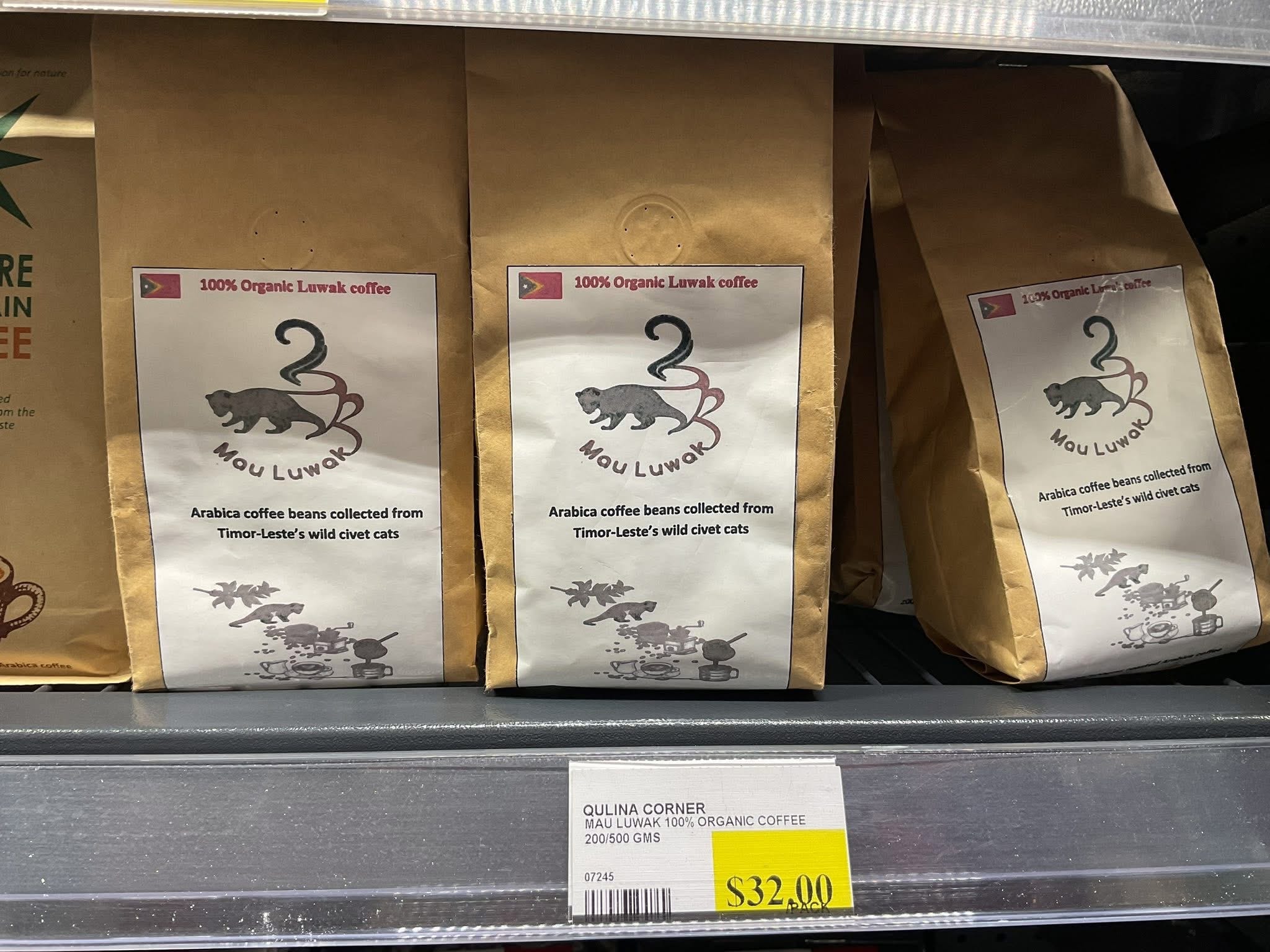
The land does produce wealth of other kinds, though. The Timorese are rightly proud of their coffee, which deserves to be much better known - and more widely available abroad. It also exports tea and maté. What's more, it's known for its spice production, which is slowly improving quality and export volumes. I can honestly say that locally grown black pepper is of stunning quality: pungent and powerfully flavour-full. I don't think I've ever tasted anything like it.
But, how to add even more value to these outstanding products? You need the right people, not only in the production process but in extending value into the service sector. The process is beginning, with the establishment of culinary academies such as Pro Ema and ETDA. I don't personally know much about ETDA, but I know people who have eaten at Pro Ema and they rave about the experience, comparing it to something from a 5-star hotel. Its students are helped to get jobs in Portugal, the former colonial power, when they finish their training. which will give them exposure to global standards and expectations. Give it a few years, and East Timor will start to see the first of these students starting to trickle back home to set up their own establishments - something the government should not just encourage, but facilitate.
What else? Well, the isolation and natural beauty would work well for spas and a wellness industry - and, indeed, this is taking root.
How does this tiny, new country build on these opportunities? High national standards and regulation, to keep shysters and low-value entrants out of the market. World class training. Capital. And, most important of all, people. People with the skills to welcome guests from around the world, conduct international marketing campaigns - and maintain the highest of standards as part of a clear and consistent national brand. There's so much here that a red-hot marketing company could work wonders with.
Before I move on, there's another relevant point. One thing in common between Thailand, Indonesia and East Timor is this: non-citizens can't own the freehold on land. Full stop. There are certain rights that they can acquire regarding leasehold, usage and so on, which vary from country to country. But they're all clear on one thing: foreigners, be that individual or corporate, cannot own land outright and their use of it is always a matter of sufferance, not of right.
The lessons for Wales should be obvious. To bang on about a point I see as critical: post-industrial Wales needs to stop thinking about itself as an advanced economy. The UK as a whole once was, but isn't any more, and much of Wales never really got there at all. As the British economy grinds to halt, Wales is going to find itself looking at countries such as Indonesia and East Timor as peers. Sorry, I know that's unwelcome and many people don't want to accept it, but that doesn't make it untrue.
The general rule: like East Timor, Wales very badly needs to establish an overarching umbrella brand encompassing our cultural heritage and national identity, our biodiversity, our outstanding products and the quality of our people. Welsh brands such as Halen Môn, Tŷ Nant, Penderyn and others have established global followings on an individual basis, as have more general sectors such as Welsh lamb. How do we integrate them into a more comprehensive narrative?
We need to ensure that a strong Welsh brand is backed up by realities rather than wishful thinking. Sadly, that means we have a lot of work to do, because we're a long way from achieving it. Like East Timor, we have cetaceans in our seas but our land long ago lost its biological diversity. We need an active restoration of nature - that is, of our Celtic rainforests and the creatures which thrive in them - via a process of rewilding and restorative agriculture. This will have to be done in collaboration with the farming community as a means to develop fewer products but of a much higher value. This income, as at the Knepp estate in Sussex shows, can be supplemented by good revenues from low-volume, high-value tourism.
The topic of tourism is highly relevant, of course. Many parts of Wales are finding that visitor numbers have risen to a point where it makes community life unbearable, without bringing any benefits to most of the people who live there. Some individuals and companies profit, of course, but not the wider community. Wales needs to become much more emphatic that our wonderful landscape is welcoming - but that tourism must benefit the nation to which it belongs. High-volume, low-value tourism needs to be discouraged, and actively reduced to manageable levels. There will be people who complain, but there always are. Wales should be resolute about this.
Wales is also behind on skills and service levels: I've stayed in too many hotels and B&Bs over the years where the owners and staff clearly made minimal effort. Perhaps hospitality outlets could be awarded grades for service as they are for hygiene, and required to display them publicly? Just a thought...
And as for the people...
Well, in the last few weeks, I've spoken to Timorese ranging in age from early teens to mid-forties, none of whom are native speakers of English, who are able not only to properly use but also to correctly define the meanings and usage of:
· tenses including present simple and continuous, past simple and continuous, present perfect and present perfect continuous;
· the use and meaning of modal verbs;
· and first, second and third conditionals.
If you can't do the same, reader, you've already been left behind. You don't understand English as well as these aspirational people from a tiny tropical country, nor are you working as hard.
As the saying goes, we have met the enemy and they are us. We are our own worst enemies because Wales is too often complacent, verging on apathy. We see it in everything from education and the trades - which in many other countries are very highly regulated and held to high standards - to hospitality and politics.
We need to have the highest aspirations, Wales, and we need to hold ourselves to the highest standards with the greatest rigour - because the world is full of options for the people with money to spend, and they can pick and choose where they spend it. We need to identify people with the right skills amongst our diaspora and work with them to see how they could bring their experience back home.
Countries like Thailand, Indonesia and, who knows, East Timor are working hard to attract the high-value markets in everything from tourism to exports. They're smart, they're hungry for success, and they're working every moment there is to achieve it.
If we in Wales don't get our act in order, all that will be left for us will be the low-spending mass market. We need to do better as a nation - and the clock is ticking.
Another thoughful post dealing with big issues, Emlyn. All of your points and ideas, of course, so important, but do these countries have the political will to make them happen? Of all of them, maybe Timor L'este, despite the big struggles it faces, does.