
Seeking the Green Chapel
I'm switching my focus away from politics to re-enchantment - and Sir Gawain's search for the Green Knight

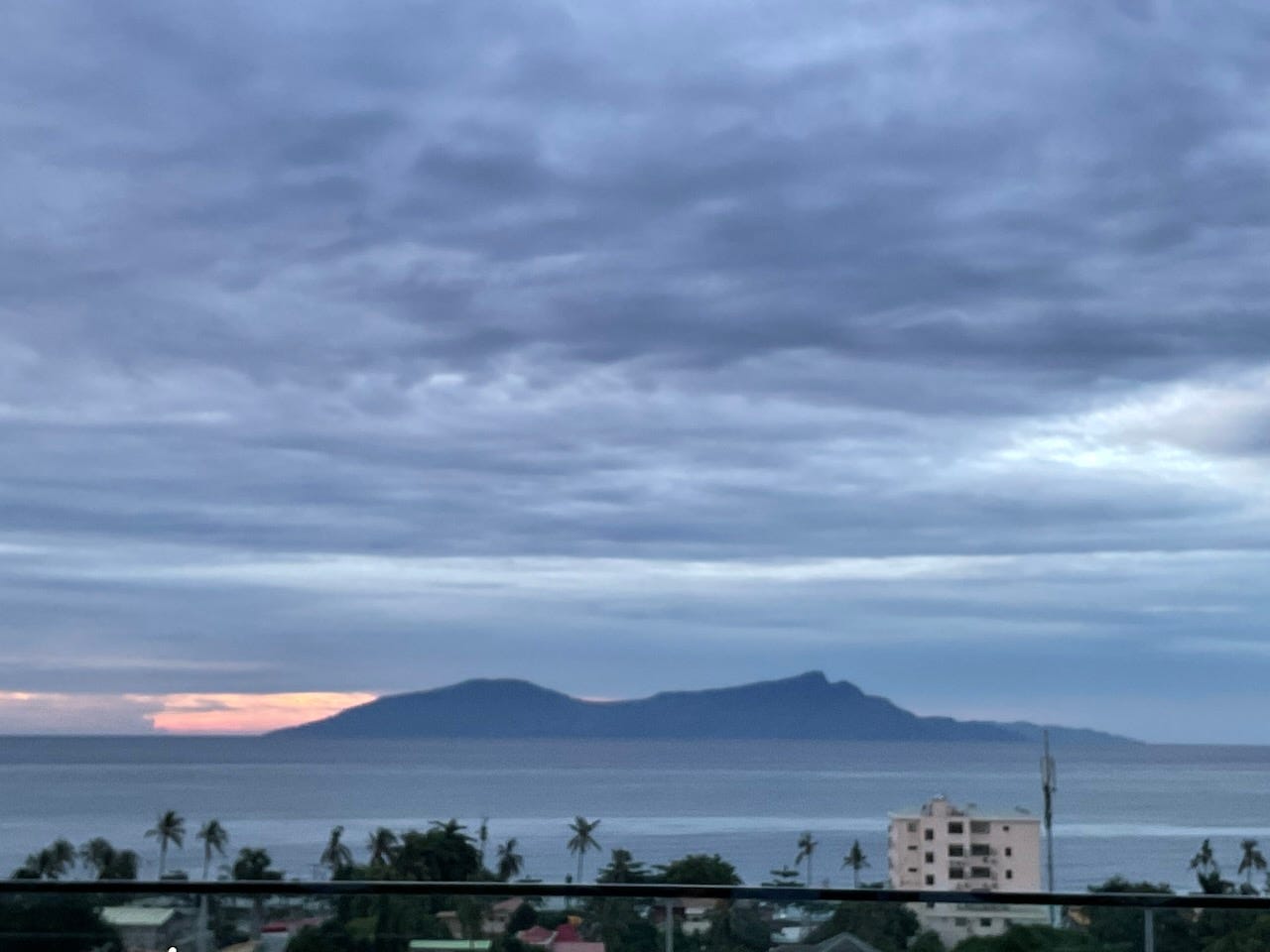
I didn't come to Timor-Leste for the deep blue sea and sky, or for the white sands and green hills. I didn't come for its business potential. I came here to survive. Back in Wales, I was ready to embrace death, despairing after too many struggles lost and with nothing left to live for. I had to get out if I wanted to live. So I'm going to pivot away from politics for a while, in favour of a much more rewarding subject: the re-enchantment of the world.
I'm going to explore this by telling the story of my search for Sir Gawain and the Green Knight as I walked across Wales and the former Marcher lordships and wild lands of northwest England in 2023-24. The hero of a medieval poem, Gawain endured great hardships and fought deadly opponents - knowing full well that succeeding in his quest would mean his death. And as we'll see, his tale is closely intertwined with the life and times of Wales's last native Prince: Owain Glyndŵr. The poem describing Gawain's quest was written during Glyndŵr's lifetime. Indeed, he may have been amongst its original audience, and he himself inhabited a culture in which poetry and prophecy were much the same thing.
It was this expedition that reintroduced me to my own country and the magical places it still holds, and to layers of history, myth and miracles that we seem to have forgotten. For over a year, Gawain and his constancy in the face of danger and death were always on my mind - and revealed the way to rebuilding my own life. It led me from a tiny hermit's chapel in a remote cove on the Welsh coast, where I received a balm for my grief, to Gawain's destination, the Green Chapel in the depths of a mossy chasm in the White Peak, not far from a town where in Glyndŵr's time the sun was known to set twice in one day.
And before I can get into that, I’ll need to discuss the ongoing re-enchantment of the world: the reversal of the belief that everything in the world and our lives can be reduced to dead matter.
I'm a writer, after all, not a professional political commentator, and there are many stories demanding they be told. Re-enchantment is one, and it's having a bit of a moment just now.
I’m also a coach, of course. Telling Gawain's story will also tell the tale of how I saved myself from a desperate situation, and started to rebuild my life, by taking careful stock of my situation, setting goals, and making a plan. That may sound a little incongruous: after all, most people who write about myth, mystery and magic don't include strategic planning and management tools in the same conversation.
But one of the things I'll be covering, a few articles down the road, is how the people of the middle ages have a lot to teach us today. They lived in a world they believed was a reflection of divine order and miracles, populated by spirits as well as the creatures of the wild: but when they planned their cathedrals to participate in the divine, they still needed to think about logistics and how to pay the craftsmen. Life in an enchanted world still needs planning! Their approach to capturing divine beauty in buildings of wood, stone and glass provides us with a model for building meaning and purpose in our own lives, using the materials we find to hand.
A significant part of this experience was learning about the seven liberal arts, the foundation of medieval education, which teach the power of language to shape minds alongside the mastery of numbers, showing that the movement of the planets, the shape of plants and the nature of music all express the same underlying principle. This system from the ancient world, refined by the great minds of the Middle Ages, trains its students to find freedom and purpose in a vibrant world. This was the worldview of both the fictional Gawain and the very real Glyndŵr. To understand it is to change the way you see the world forever.
As I write this, I'm sitting in a bar on a tropical island. Just a few metres away is the beach: a narrow strip of white sand that, from where I'm sitting, is almost completely hidden from view by bushes and trees. A couple of fishing boats are pulled up out of the water: essentially open canoes, with outrigger poles to add stability. They'll set out to sea after dark, when the local fishermen use lights to attract fish and squid in the shallow waters just offshore. Modernity hasn't yet sufficiently arrived to overwhelm traditional rhythms and life.
This isn't the first time that moving to a non-western culture has saved me. If I hadn't come here, I think I would be dead by now. I was in the depths of depression, and had absolutely nothing to live for. I was planning my death, with everything ready for a quick, painless end.
I needn't go into the details of my life at the time; not now, anyway. Many will emerge in coming posts. And I'm not going to describe how I'd prepared to make my final exit. If you're seriously depressed, as I was, please seek support - and understand that there can be a positive way to change things, as I hope to show.
As I look outwards, over my screen, the sea is a deep, deep blue, increasing in vibrancy in clearly-distinguished bands indicating sudden drops in the sea floor. On the horizon, uniting ocean and atmosphere, a steep-sided, twin-peaked island. Its green wooded slopes are illuminated by the sunset, revealing itself through the shrinking clouds. Columns of mist rise as the sun's heat falls on the recent rainfall.
It's beautiful. Just sitting here, watching the systems and cycles of nature, is a balm for the soul, easing all worries.
In the end, I didn't kill myself because I was able to spot that I was repeating a pattern that had been worsening over the years. In my teens, I was suicidal. Then I went to work in rural Africa and I was really happy there. In my late twenties and early thirties I was back in Wales and once again spiralling down into hopelessness. Then I went to work in Singapore, and found real fulfilment in life. In my early forties, I was back in Wales and once again planning how to end it all. Before it was too late, I went to work in Russia and China, and found wonder.
You’ll be able to see the pattern yourself…
I’m not pointing the finger at Wales, particularly. My loss of hope is widely shared. It’s become a crisis across the United Kingdom. From the Office for National Statistics, to the Lancet and from the House of Commons to the NHS, authorities all agree: a large proportion of Britons suffer from depression and the loss of hope.
The data shows that this crisis of despair got worse after the end of lockdown. It's as if we all had a reset: we were forced to suspend ‘normal life’ for up to a year and, when we went back, we were able to see just how… crappy and pointless it is. Now the number of prescriptions for antidepressants is climbing scarily fast, just like the rise in illegal drug use – and so is the number of suicides.
What’s behind all this? I’m sure there are all kinds of reasons that could be suggested, but let me offer my own.
Today, we struggle to find belonging, hope, or fulfillment, cut off from our past and future.
We’re cut off from nature; many of us are removed year-round from the natural cycle of light and darkness by the glare of artificial light. We live in increasingly dreary places, eating processed food created in factories, not grown by farms. We can’t see the stars; we rarely see wildlife or hear birdsong. And even when we do get out into “the natural world”, it’s a dead space: empty and lifeless compared to the environment our ancestors knew even in living memory. Heck, it’s a desert even compared to the already-impoverished ecosystem I grew up in myself.
For too many, there's no magic in Britain anymore. No sense of awe or beauty, of connection with a living and feeling world. But my turn to myth, and my decision to walk across Wales in search, like Sir Gawain, of the Green Chapel showed me that this can change.
As the saying goes, “the past is a foreign country. They do things differently there.”
In Europe, our ancestors until very recently believed unquestioningly in things that modern culture scoffs at. They believed quite seriously that we are just a part of a living universe, one that is occupied by intelligences and powers: some minor, some comparable to us, others far mightier. These minds are embodied in the features of the landscape and the teeming life that once surrounded us - or are not embodied at all.
But we lost all of that.
The process began centuries ago, when we started to tell ourselves that we could explain everything. That everything in the world around us could be measured, defined, listed, and accounted for.
There was no place for mystery or awe or wonder any more. No possibility that the world might extend not only beyond the reach of our senses but beyond our comprehension; a world in which beings we can't directly sense can nevertheless engage in relationships with each other... or with us. We became 'butterfly collectors', preferring desiccated shells, pinned, categorised, and labelled in a box, to the colourful, self-willed beauty of the real world.
But enchantment is seeping and oozing back into our consciousness, like flood waters between our intellectual sandbags. In a future post, I’ll talk about how that’s happening – and about how “science”, which displaced religion and began the process of disenchantment, is now taking us back to it, peer-reviewed study by peer-reviewed study.
Before that, though, I’ll talk about how recognising the pattern in my life saved me and led me to understand that if I wanted to live I had to leave Wales.
It’s because this process of ‘scientific disenchantment’ didn’t happen everywhere, and I’ve been fortunate enough to experience that enduring sense of enchantment in Africa, in China, in Singapore, and in Russia. Over the next couple of posts I’ll be detailing some of those experiences.
Then, once I’ve told you how I encountered a vibrantly magical world by living in cultures which haven't experienced the West's loss of enchantment, I’ll go into how I started to search for it in my own country: my quest for Sir Gawain and the Green Knight. My quest for a life full of meaning and joy...
Glad you've been re-enchanted. I think the dragon may be next? 🐲